Start with a check-up at your vet! You'll want to be sure that your fuzzy friend is feeling his/her best and
has all of the protection that you can give them when you expose them to the stress of leaving their
familiar surroundings.
|
Call ahead and make reservations at the motels where you hope to stay. Most have a limited number of
rooms that they rent to persons with animals. Check the motel's policies regarding dogs alone in rooms,
areas where you can walk them, where to put the feces you've cleaned up, damage deposits, deposit
refunds, etc.
|
When you travel, your pet may be exposed to diseases that may be different from where you live or are
rare. Your vet can take care of the necessary immunizations and see to it that your pet has flea and
heartworm protection. Consider getting a kennel cough vaccination too - especially if the trip involves a
dog show.
|
|
enjoy your trip with your best friend!
|
|
|
Make a list of necessary items to take with you:
- Crate, kennel, or seat belt harness
- Any regular medications - heartworm pills, thyroid pills, arthritis medication, etc
- Proof of vaccinations
- A sturdy leash and an extra collar with your name, address and emergency phone
numbers on them
- A recent picture of your pet
- Some of your pet's clean bedding, favorite toys and chew treats
- Several days of your pet's food
- Dog bowl and a water bucket
- Extra drinking water from home
- A first aid kit with:
- Baby wipes and other grooming supplies
- Flashlight for nighttime walks
- Carpet cleaner, disinfectant sprays and old towels
- Windshield and side window shade
- Spare car keys
|
|
Copyright 2010 - 2020
Heartland Dog Training & Education Foundation
|
|
|
- Beach Buddies
- Dock Diving
- First Aid
- Hiking
- Puppy Paddlers
- Water Dog
- Freestyle
- Frisbee
- Lure Coursing
- Plus many more
Are You Thinking of Taking Your
Dog with You on Your Next Trip?
|
|
|
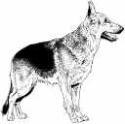
Prevention is the cure! Breeds that have upright ears are at risk of remaining in the
upright position if care is not taken to avoid damage!
To help prevent injury, please remember the following guidelines:
|
|
|
- The ears of a puppy are VERY fragile and much care must be taken to insure that the ears will be
straight up and strong when the dog matures.
|
|
- DO NOT let anyone play with, pull on, or bend the ears down. This can break the cartilage and it
cannot be repaired. When petting the head, do not run your hands over the ears, rather, pet starting
behind the ears.
|
|
- Watch the size of the crate. It should be large enough so that the ears do not touch the top. This is
very important.
|
|
- While your puppy is teething, the ears will go all different directions. They will be up one day, down
the next, crossed against each other or one up and one down. This is normal, so don't worry about
the ear position during this period of time.
|
|
- If for some reason, due to no fault of yours, the Puppy's ears do not stay up by the time they are four
to six months of age, ears may be taped in the upright position for a short time. This very well may
correct the problem of "lazy" ears at an early age. Consult your veterinarian or someone at
Heartland about this procedure.
|
|
- If your dog has allergies, pay special attention to their ears! Ear infections are common with allergic
dogs and excessive pawing or scratching can cause the ear membrane to form a blood hematoma.
In many instances, the only solution to this problem is surgical intervention which may cause scar
tissue that weights the ear down, causing them to flop over.
|
|
|
|
|
The St. Helen, Michigan camp is located on 80 wooded acres and has many
Scouts website at www.dogscouts.org
|
|
|
Canine Vestibular Disease
One day our 15 year old dog became disoriented, unbalanced and appeared to be confused.
He was leaning toward one side, shaking his head, going around in circles, etc. We thought he
may have had a stroke and took him to the emergency animal clinic. Instead of a stroke it
turned out he was suffering from Canine Vestibular Disease—also known as “old dog
vestibular syndrome.”
|
Vestibular means a problem with the connections between inner/middle ear and brain causing ataxia. Dogs
with ataxia stand with their limbs braced, they walk with difficulty and have a “drunk” type of motion
because they have lost their sense of balance. When the vestibular nerve, which travels from the inner ear
to the brain, malfunctions. It disrupts the animal’s sense of balance and orientation.
|
It is important to find out where the vestibular abnormality is located. The disturbance can be peripheral,
meaning it is located outside the brain, or central, located inside the brain. The distinction between the two
is subtle and is best diagnosed by a veterinary neurologist. The peripheral disturbance is the most
common and least serious.
|
It has been suggested that there is a correlation between old dog vestibular syndrome and hypothyroidism
so blood work should be done to rule out this problem.
|
The ears should be thoroughly examined because the same symptoms can result from a severe ear mite
infection. Also certain types of antibiotics such as streptomycin and gentomicin can cause vestibular
syndrome.
|
This syndrome is not a life threatening condition, nor should it even be called old dog vestibular syndrome
because young dogs have also contracted it. However, in most cases old dogs are seen by veterinarians
with this condition more often.
|
Time is a major factor in old dog vestibular syndrome. Recovery time depends on the afflicted dog.
Eventually the animal teaches itself to compensate and overcome old dog vestibular. Rest and quiet are
required during this recovery time, and it’s important to keep the dog in a well lighted room. If possible,
avoid carrying the dog, or, if this is unavoidable, lift the dog slowly and smoothly and hold the pads of it’s
feet while airborne. Lifting and moving it through the air disrupts the dog’s sense of orientation. Keeping
the dog’s feet firmly on the ground with it’s eyes on the horizon helps regain it’s balance.
|
This condition is sometimes misdiagnosed and dogs who could have recovered have been euthanized
because the condition appears so severe. It is important to note that there are no warning signs, which
may lead to the conclusion that it is a stroke. Fortunately most dogs will be spared this affliction. However,
if your dog does contract this disease, it is comforting to know that it is not fatal and recovery is merely
a matter of patience and tender loving care. Please note that a serious inner/middle ear infection—which
can occur without the customary smelly ear—has the same severe and frightening symptoms. An infection
can usually be cured with antibiotics and the dogs have a complete recovery. Drugs that might be used
to treat old dog vestibular syndrome include Cholodin Tabs and Winstrol V. As always, check with your vet.
|
|
Pet Rescues
|
Most of the breed clubs have a group of very dedicated individuals that go to all of the local rescue
shelters and watch for animals that resemble their breed. They "foster" these abandoned animals and take
them into their homes until they can find a suitable, loving home for them.
|
|
The AKC has a list of Pet Rescue organizations on their web site! Go to www.AKC.org and look up the
rescue group for your favorite breed!
|
|
Your veterinarian's office will also be able to give you a list of local breeders in your area and will be happy
to help!
|
|
| |
|
Dog Scout Camp
|
Vacation with your dog at Dog Scout Camp! Just like a Girl Scout or Boy Scout camp, your dogs can earn
Merit Badges for activities such as:
|
|
|
|
|